Rust Never Sleeps: Protecting Your Omaha Garage Door from the Red Menace
Here in Omaha, Nebraska, we’re no strangers to changing weather. From humid summers to snowy winters, our homes, especially our garage doors, take a beating. And one of the most insidious threats to your garage door’s longevity and smooth operation is rust.
Rust, that familiar reddish-brown flake, is more than just an eyesore. It’s a destructive force that can significantly compromise the safety, functionality, and lifespan of your garage door. Let’s break down what rust is and how it can affect various parts of your crucial Omaha garage door system.
What Exactly is Rust?
Scientifically speaking, rust is a form of iron oxide, a result of iron and oxygen reacting in the presence of water or moisture. Since most residential garage doors and their components are made from steel (an iron alloy), they are highly susceptible to rusting, especially in our climate.
Where Does Rust Attack Your Garage Door?
Rust doesn’t discriminate; it can affect nearly every metallic component of your garage door.
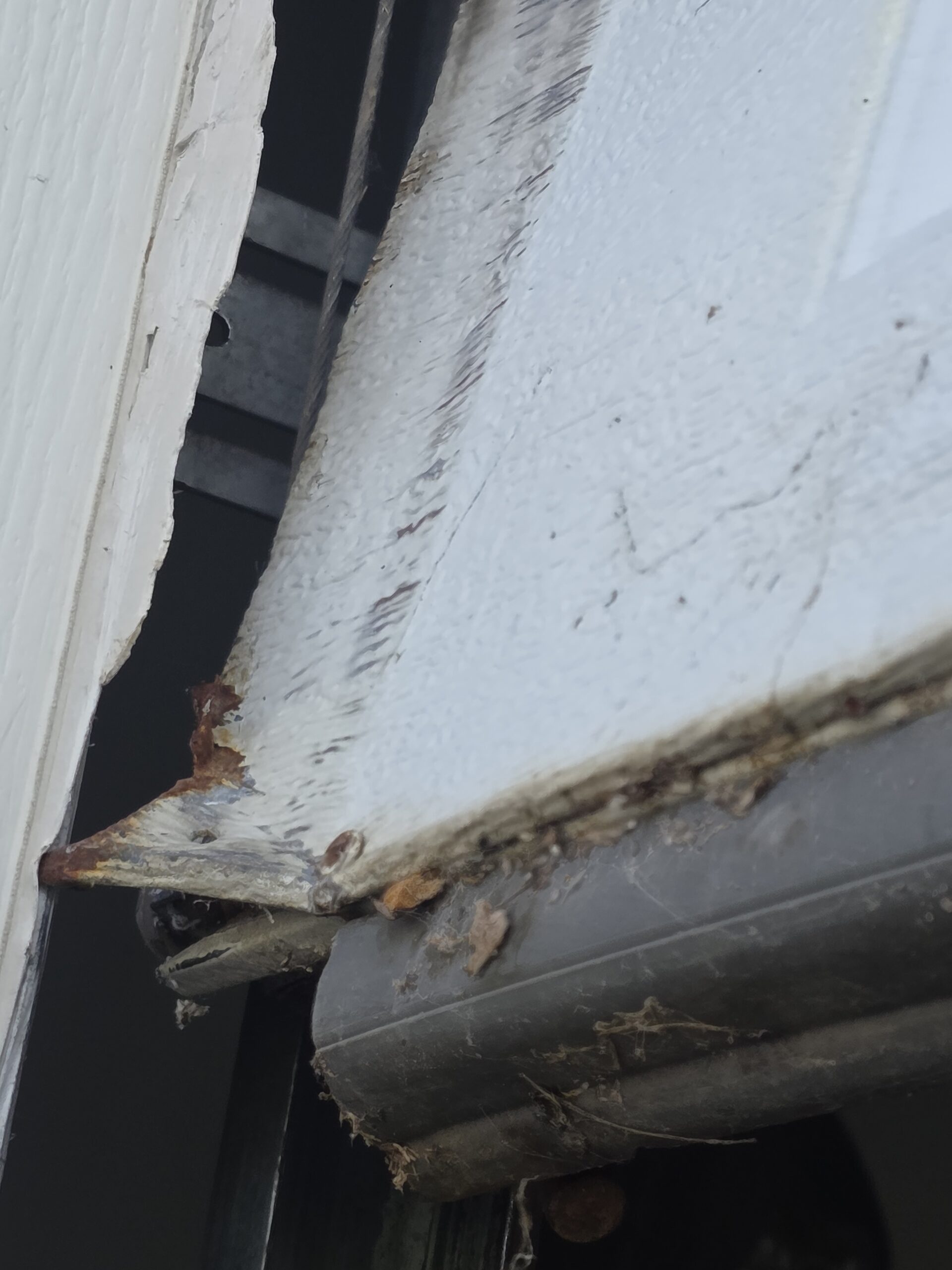
- Garage Door Panels: While many modern garage doors feature protective coatings, scratches, dings, or prolonged exposure to moisture can allow rust to start on the steel panels. This can lead to unsightly discoloration, bubbling paint, and eventually, structural weakening. A rusted panel not only looks bad but can compromise the door’s integrity, making it less secure and efficient.
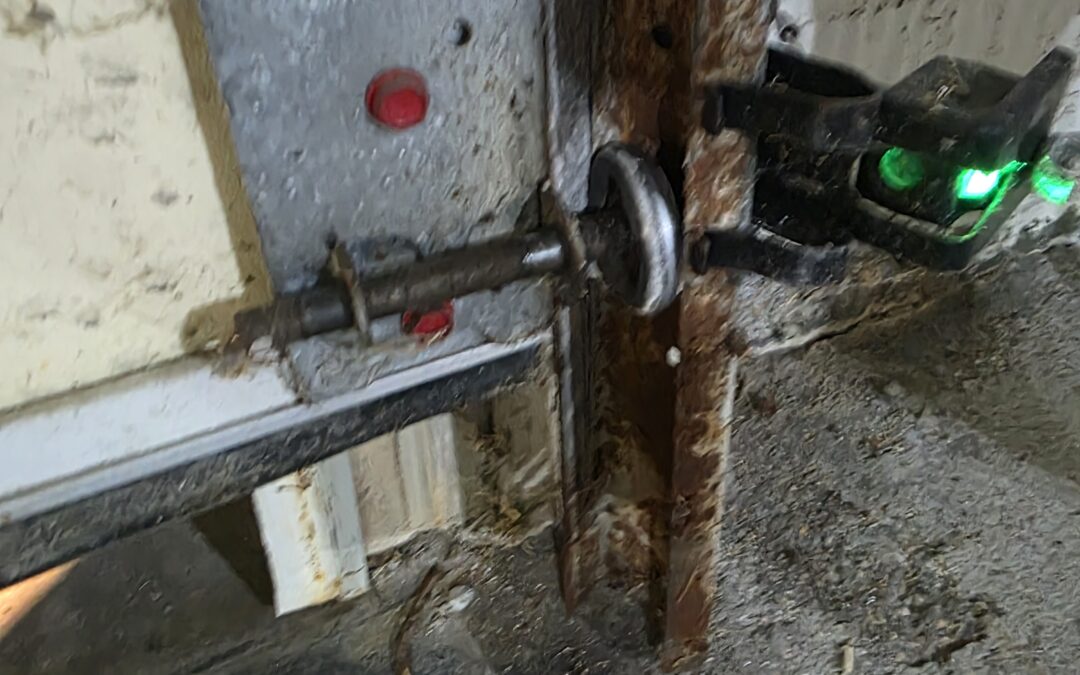
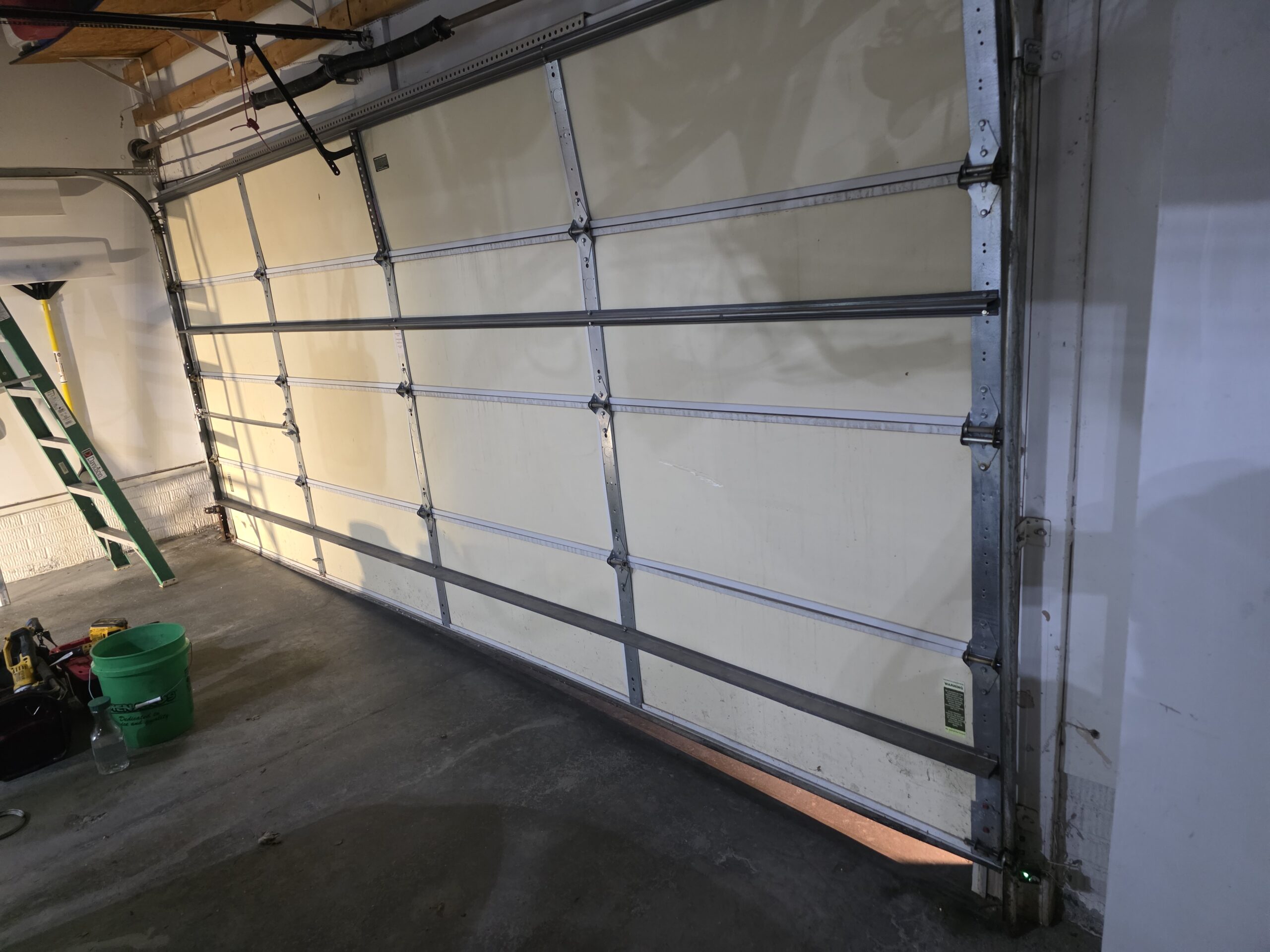
- Tracks: The horizontal and vertical garage door tracks are critical for guiding your door smoothly. Rust here can cause friction, making the door judder, stick, or even derail. This puts extra strain on your garage door opener and can lead to costly repairs for garage door repair in Omaha.
- Rollers: These small but mighty components help your door glide along the tracks. Rust on the roller bearings or the rollers themselves can cause them to seize up, leading to noisy operation and inefficient movement. This often necessitates garage door roller replacement.
- Hinges: The hinges connect the individual panels of your garage door. Rusted hinges become stiff and brittle, making the door’s movement uneven and potentially causing panels to misalign. They can even snap, leading to a dangerous situation where a panel could detach.
- Springs (Torsion and Extension): The garage door springs are under immense tension and are vital for lifting and lowering the heavy door. Rust on these springs can weaken the metal, making them more prone to premature failure and sudden, dangerous breaks. Garage door spring repair or replacement is a common service, and rust often plays a role in their degradation.
- Cables: The garage door cables work in conjunction with the springs to lift the door. Rust can fray and weaken these cables, leading to a snap and a potentially free-falling garage door – an extremely dangerous scenario. Regular inspection for rust and wear on cables is crucial.
- Nuts, Bolts, and Fasteners: Every small metal piece that holds your garage door together is a potential rust target. When these fasteners rust, they lose their grip, leading to loose components, increased vibrations, and potential structural failure.
- Opener Chain, Chain/Cable, and Belt: While some openers use belts, many rely on a metal chain or chain/cable. Rust on the opener chain or chain /cable can lead to sluggish movement, increased noise, and eventual failure of the garage door opener system. Belt drive openers fail typically due to fraying of the belt itself instead of rust.
Protecting Your Investment: Preventative Measures and Professional Help
The good news is that you can take steps to combat rust and extend the life of your new garage door or existing one.
- Regular Cleaning: Wash your garage door periodically with mild soap and water, especially after exposure to road salt in winter.
- Lubrication: Regularly lubricate moving metal parts like rollers, hinges, and springs with a silicone-based garage door lubricant. This reduces friction and creates a barrier against moisture.
- Paint and Sealant: Address any scratches or chips on your garage door panels promptly to prevent rust from taking hold.
- Replacing severely rusted parts: Replacing cables, track, panels, rollers, and brackets with extreme rust can prevent the need of emergency services. Emergency services can be costly or lead to a full on replacement. Yikes!
- Drainage: Ensure proper drainage around your garage to prevent water from pooling near the door.
For more extensive rust issues or for proactive maintenance, it’s always best to call the professionals. Gelvin Garage Doors, an experienced and trusted Omaha company, can inspect your door, identify rust-affected areas, and provide comprehensive solutions, from garage door spring replacement to panel repair and full system tune-ups. Don’t let rust eat away at your peace of mind or your wallet. Invest in the longevity of your garage door today! Call or text Gelvin Garage Doors at 402-594-3862. We offer garage door service in Omaha, Millard, Elkhorn, Bellevue, Fremont, Bennington, Papillion, Ralston, La Vista, Plattsmouth, and many other areas surrounding the Omaha Metro!
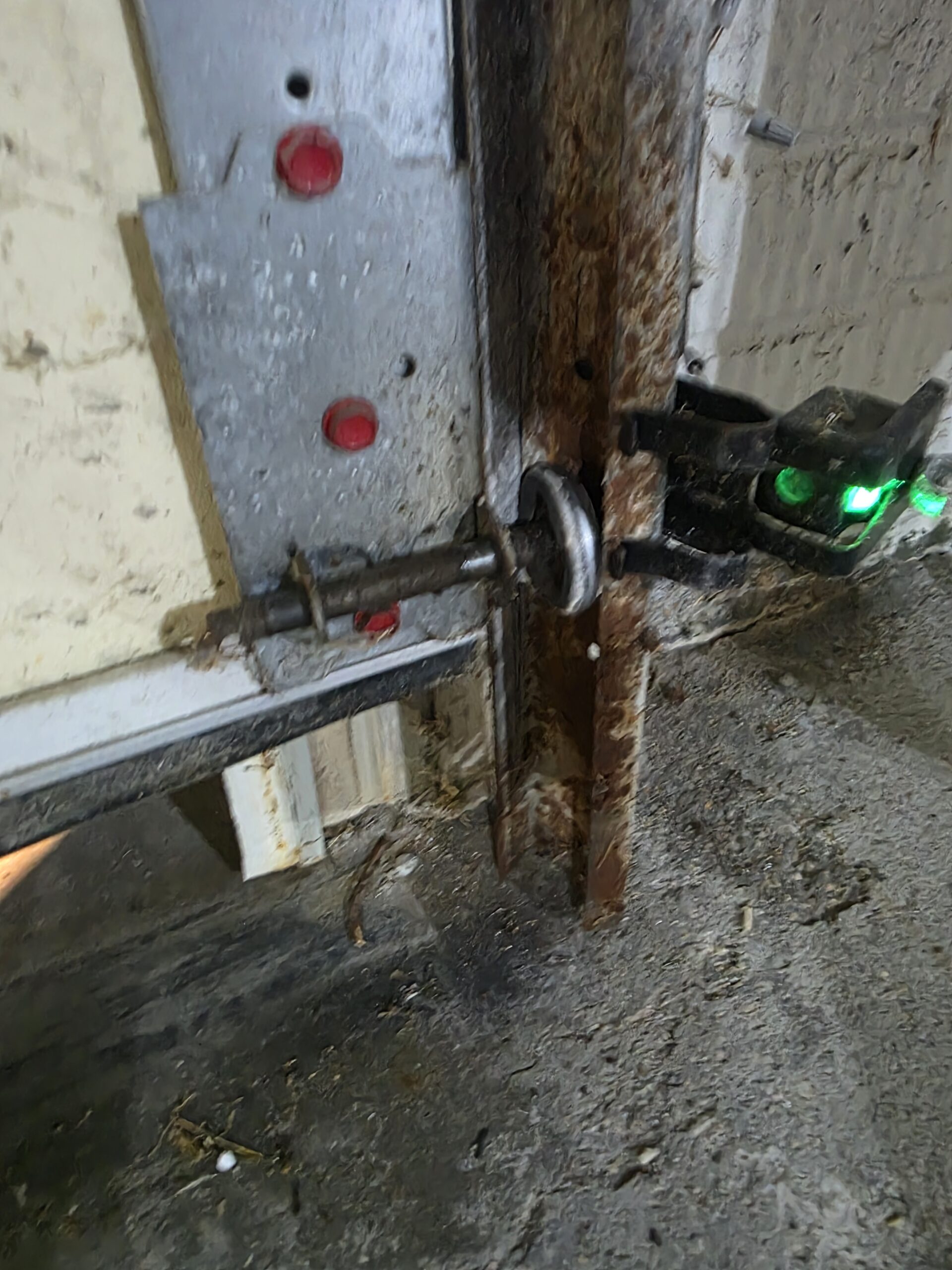
Rusty Garage Door Track
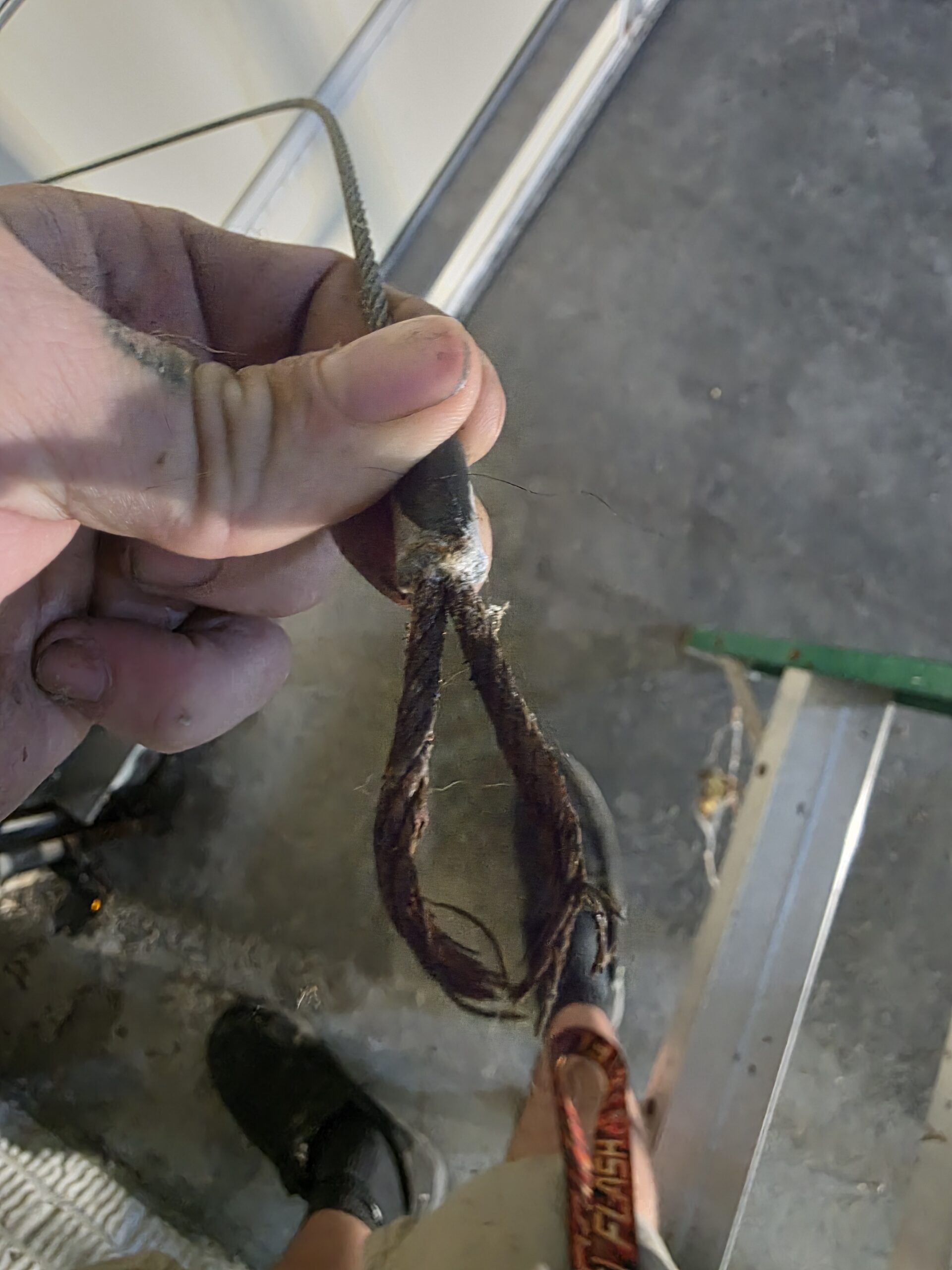
A Rusty Garage Door Cable
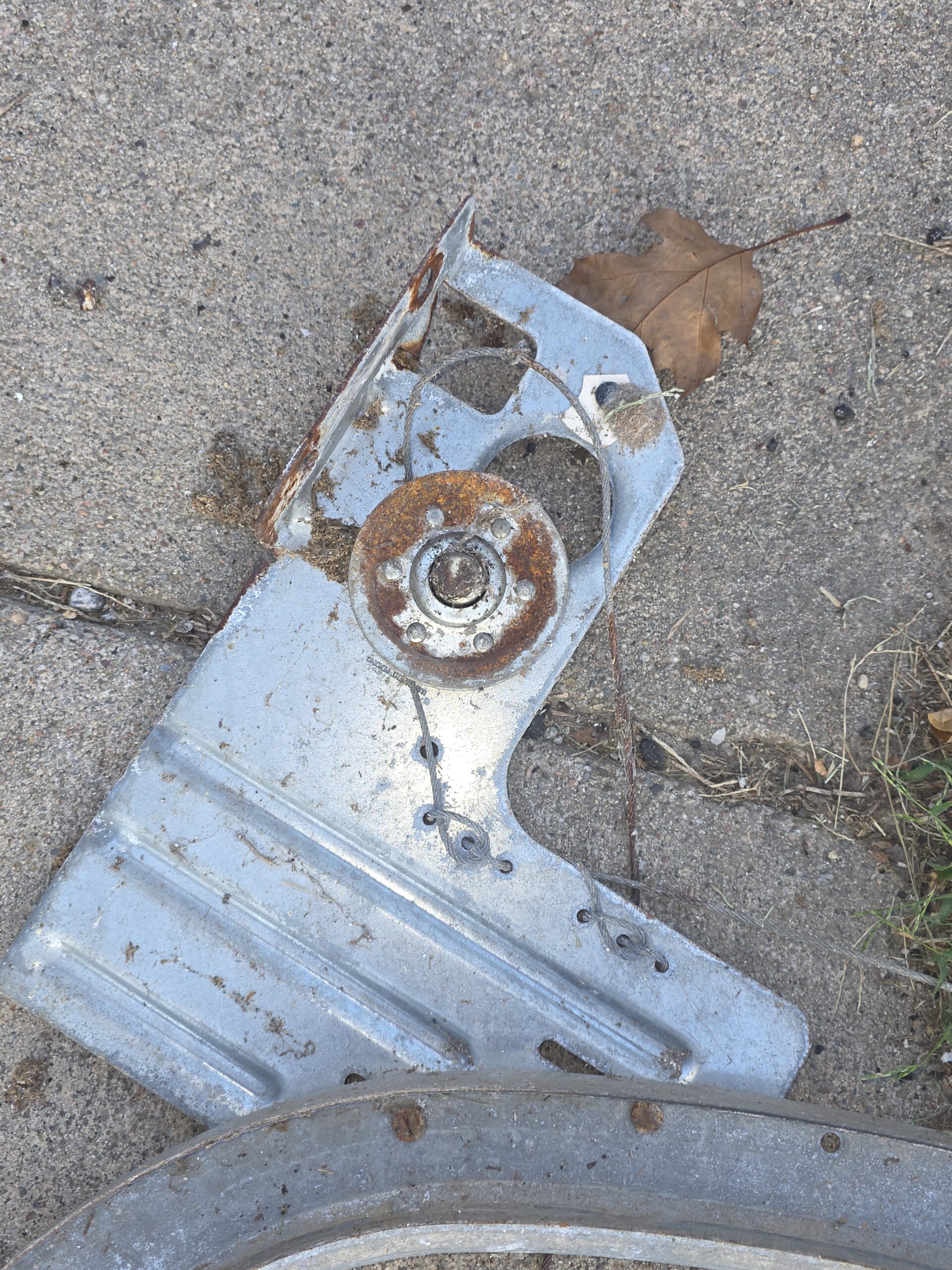
Rusty Pulley and Track